
What Actually Fixes Textured Skin, and What's Just Marketing
By Dr. Hwang Seonhwa, Director, Dermatology
"Textured skin" is one of those phrases that gets used for about five different problems, which is exactly why patients end up trying three treatments that don't actually fix what's bothering them. Before recommending anything, I usually have to ask what you mean by texture — because enlarged pores, generally rough or bumpy skin, and dull or uneven-feeling skin are different problems with different fixes.
Start by naming the actual problem
If you run a finger across your cheek and feel distinct bumps, or see visibly enlarged pores in photos, that's a surface and pore-structure issue. If your skin looks dull, feels rough in a drier way, or just doesn't reflect light evenly, that's often more about skin quality and barrier health than pore size. And if what's changed is less about the surface and more about how your skin sits — slightly heavier along the jaw, less taut overall — that's a firmness issue, not a texture one, even though people often describe it with the same word.
For pore size and surface roughness: RF retexturing
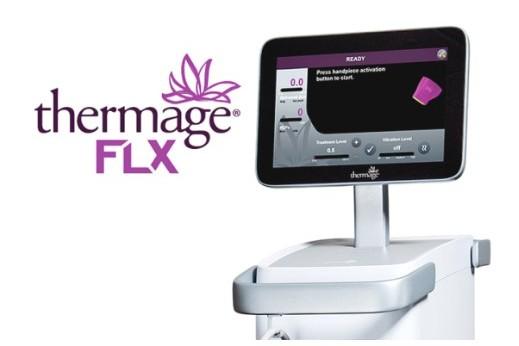
This is specifically what Thermage FLX is built for. It delivers RF energy through a wider tip guided by an automated algorithm, and it's used for improving skin elasticity, reducing pore size, softening fine lines, and improving overall skin texture — retexturing is a direct part of what it's designed to do, not a side benefit. Results generally last around 10 months to a year, which is why repeat sessions on that schedule are typically recommended rather than expecting one treatment to be permanent.
For dull, rough, or barrier-compromised skin: regeneration, not resurfacing
If your texture complaint is really about overall skin quality — dryness, dullness, skin that feels thin or reactive — a resurfacing device isn't always the right first move. Rejuran, built around PDRN, is associated with supporting skin cell regeneration, activating collagen, and helping repair damaged skin tissue, along with delivering hydration deeper than a topical product can. For skin that feels rough because the barrier is compromised rather than because pores are enlarged, this addresses a different part of the problem than an RF device does.
When "texture" is actually a firmness problem
Onda uses Coolwaves RF energy to target fat cells in the deeper layer while also stimulating collagen in the deeper skin layers, which is why it's used for reducing localized fat and firming skin that's started to sag. If what's actually bothering you is the lower face looking heavier or less defined rather than the skin surface itself, Onda is addressing a different cause than Thermage or Rejuran — and running more sessions of a resurfacing or regeneration treatment won't fix a firmness problem it was never built to treat.
The short version: match the tool to the actual cause before committing to a package of sessions. A consultation that actually looks at your skin under good lighting is worth more than any single device's marketing claims.
Related Procedures
Have a question about this treatment?
WhatsApp Us